From November 5 to 14, 2026, I spent ten days and nine nights in Chiang Mai on my second solo trip to the city.
Before leaving, I had decided not to pack each day with sightseeing or rush through tourist checklists. The plan felt more like moving my daily routine to another city: drinking coffee, bringing my laptop along to write code, hitting the gym on schedule, doing laundry, grocery shopping, and visiting a few neighborhood temples along the way.
I had assumed accommodation and living costs in Chiang Mai would be noticeably cheaper than in Bangkok, saving me some money overall.
After staying for over a week, I realized that without a dense rail transit network, whatever I saved on rent and meals quietly turned into Grab fares and steps under the scorching sun.
Layovers, Arrival, and the Radius of Two Stays
On the way there, I flew Scoot TR875 from Taoyuan to Singapore on a Boeing 787-9, then connected to TR698 to Chiang Mai on an Airbus A321neo. The layover in Changi was nearly nine hours—eight hours and forty-five minutes, to be exact.
Automated immigration at Changi Airport was remarkably smooth. Foreign travelers can use the automated lanes without manual passport control, making it one of the few airports worldwide, if not the only one, fully open to all foreign visitors for automated clearance.
During the layover, I cleared customs to see the Rain Vortex waterfall at Jewel, but honestly, I did not really care for it and headed back to the transit area to rest.
Because Scoot generously includes a laptop bag plus a carry-on for a combined 10 kg allowance, I could skip paying for checked baggage and only spent NT$290 on priority boarding to make sure there was overhead bin space. At the gate for the second leg, the ground crew noticed tight cabin bin space on the A321neo and offered free gate-checking, though since I had already paid for priority boarding, I decided to carry it aboard myself.
The flight landed in Chiang Mai at 15:40 on November 5. With no checked luggage, I cleared customs quickly. Despite traffic near the airport, I reached my first accommodation, One More Space, an hour before the 17:00 check-in cutoff.
For the first three nights, I stayed at One More Space on Wua Lai Road south of the Old City in a third-floor loft studio apartment. My daily radius stayed mostly around the southern edge of the Old City and the area outside the Silver Temple. On Saturday evening, I strolled through the Wualai Walking Street nearby.
For the next six nights (November 8–14), I moved to Sunshine House in Santitham and did laundry the same day—I had miscalculated my pacing before switching places and nearly ran out of clean clothes.
After moving to Santitham, my activity shifted toward Santitham, Maya Lifestyle Shopping Center, and Nimman. The rhythm felt much more like a short-term stay, and I skipped the Sunday Walking Street originally planned for that evening.
Daily Tradeoffs Without Transit: Walking or Calling a Grab
Chiang Mai does not have a dense rail network like Bangkok’s BTS or MRT. Moving across neighborhoods comes down to walking combined with Grab—though I also looked into Bolt and songthaews, taking a songthaew solo is not always on your route and comes with communication hurdles.
Stepping outside every day meant doing a small mental calculation: a destination looks close enough on the map, calling rides adds up quickly, yet walking under the sun drains energy fast. To keep the budget under control, I walked a lot over those ten days, and roughly half of what I saved on rent went into Grab fares and sweat.
Visiting Wat Phra That Doi Kham was a classic example. I saw a ride quote of ฿250 going up the hill and passed on it, then later took a ride up for around ฿170 to visit the temple. On the way down, I unexpectedly found that the temple runs its own shared songthaew service down the mountain for just ฿20 a ride.
Most other days were spent walking between the Old City, Santitham, and Maya. At Wat Sri Suphan (the Silver Temple), I saw the admission fee at the entrance and only looked around from the outside, whereas I stopped by Wat Santitham near Sunshine House along my route.
Beyond temples and shopping malls, moving around the city also led to a few offbeat detours—like Mumu Chan Japan (มูมู่ จัง เจแปน), a large Japanese secondhand toy and vintage goods warehouse open until 11 PM. Beneath its high metal roof, rows of black shelving and display tables were packed with anime figures, plushies, vintage clocks, and old bicycles, making it a surprisingly fun treasure hunt in Chiang Mai.
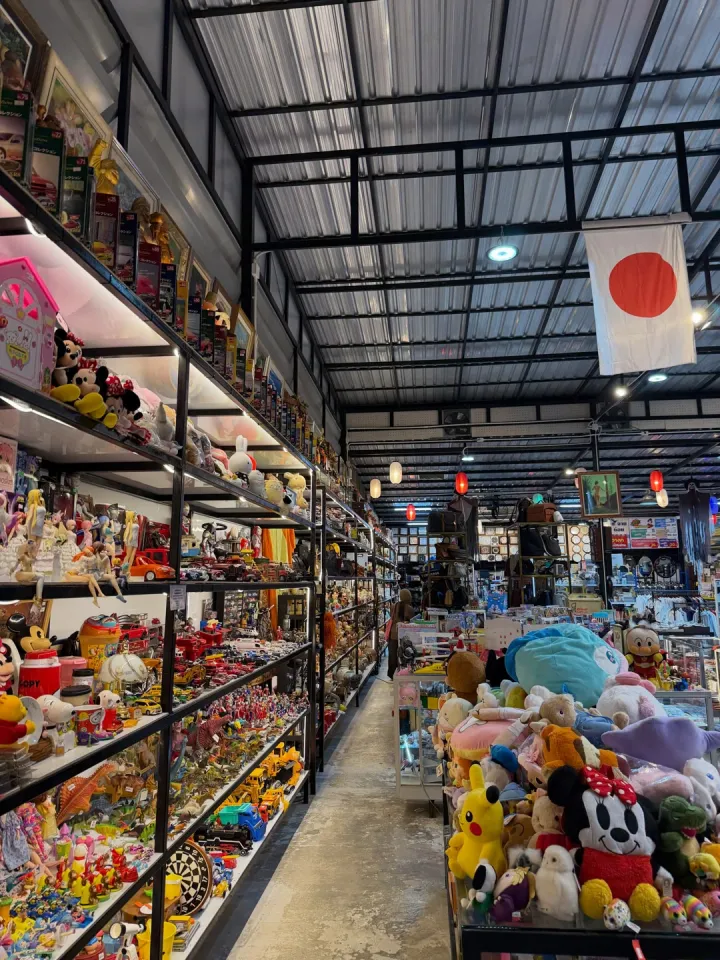
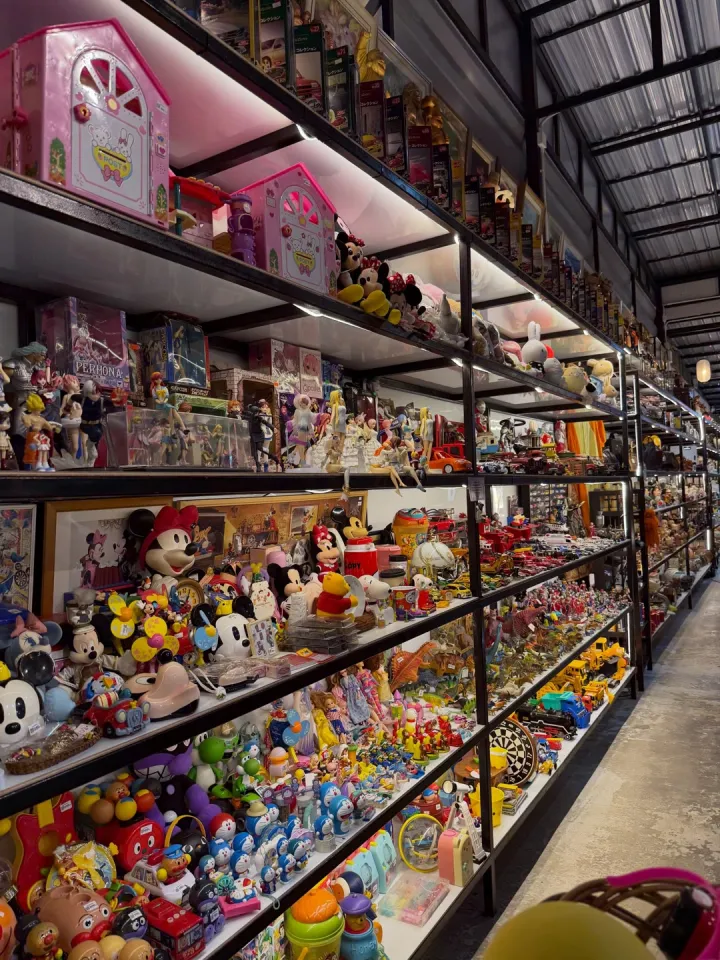
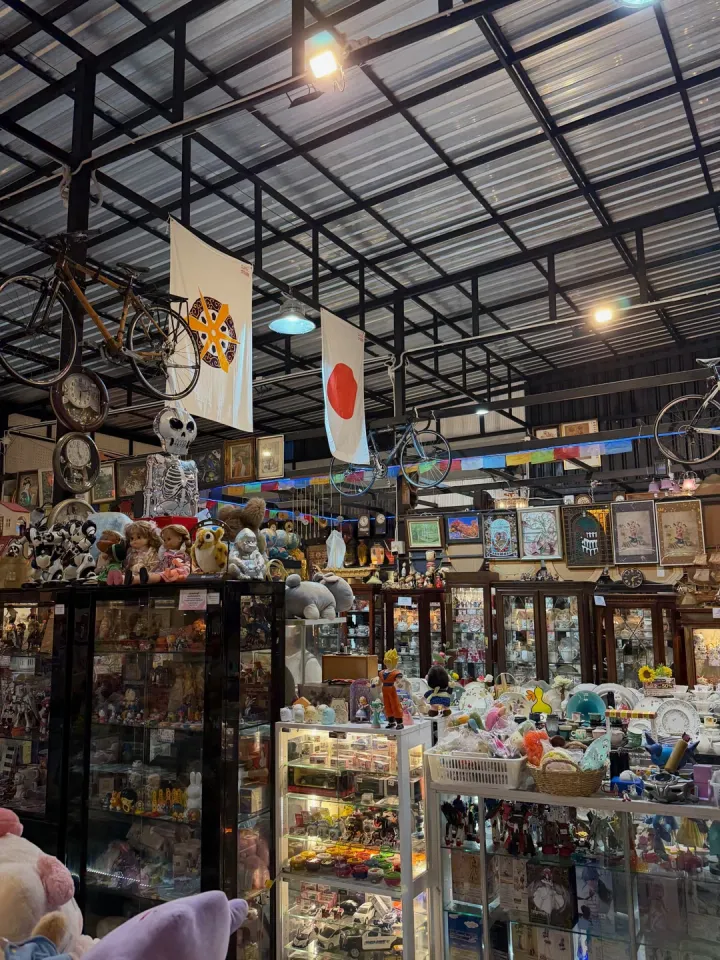
Once while crossing the street, a passing motorcyclist went out of his way to warn me in Thai to be careful, and I ended up looking up what that pronunciation meant afterward.
Air-Conditioned Cafes and Gym Price Shifts
I usually prefer black coffee with natural sweetness, balanced acidity, and a clean finish, rather than heavy bitterness.
In Chiang Mai, finding cafes was mainly about sitting down in air conditioning to rest or opening my laptop to work on software and AI agent tasks. Sometimes when my agent token quota ran out, I just closed the laptop and spaced out in the shop.
After visiting a round of cafes, I noticed that indoor shops with air conditioning roughly double in price (around ฿60–฿80 for a dine-in Americano, compared to ฿30 takeout Americanos I had in Bangkok before, though takeout and dine-in have different baselines), which probably relates to electricity actually costing more in Thailand than in Taiwan.
I visited several places across the trip: early on I went to Artisan, and ordered a ฿65 iced Americano at Rei that was smooth, clean, and comfortable for a longer stay.
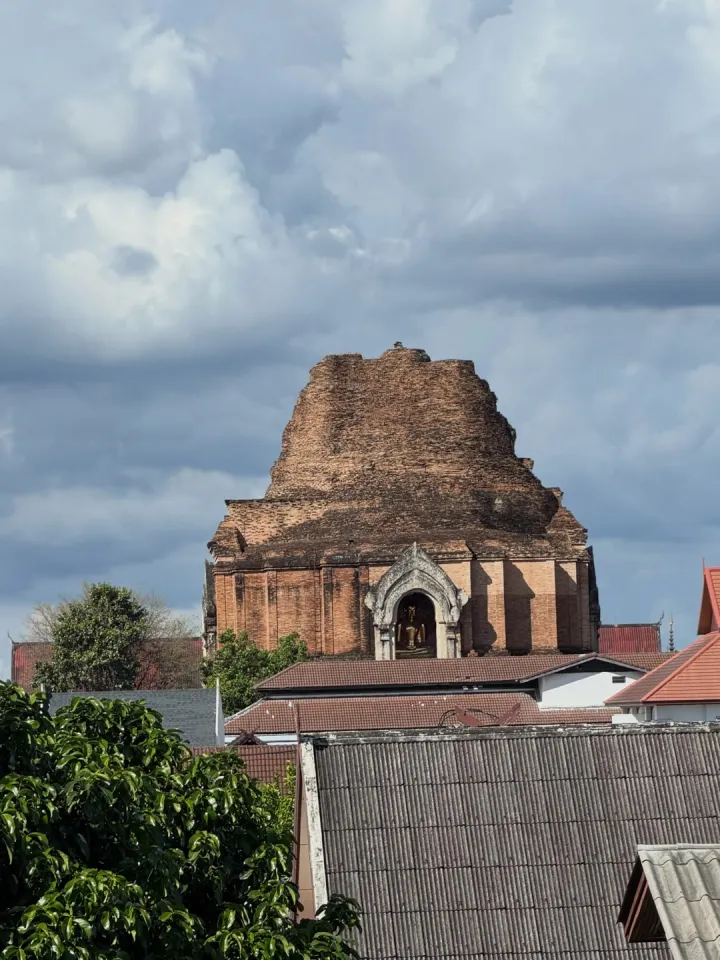
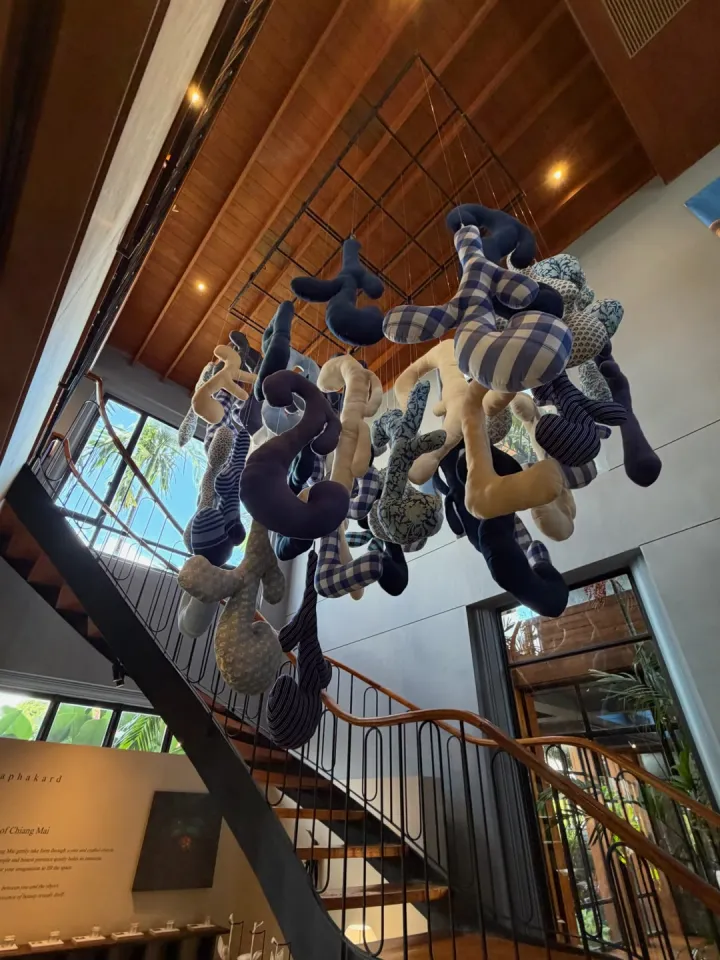
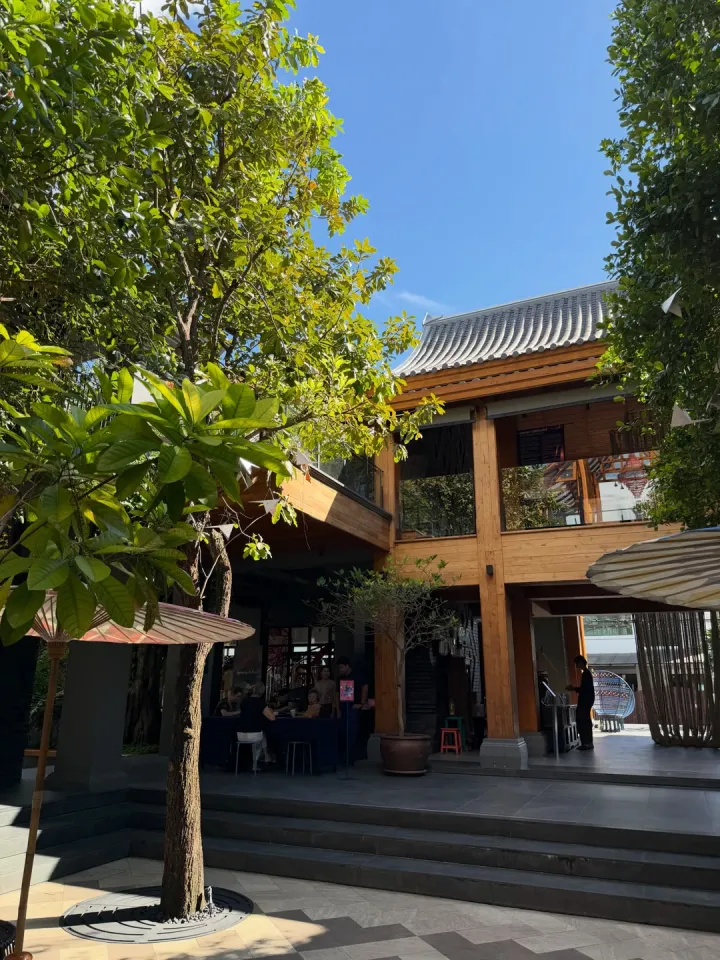
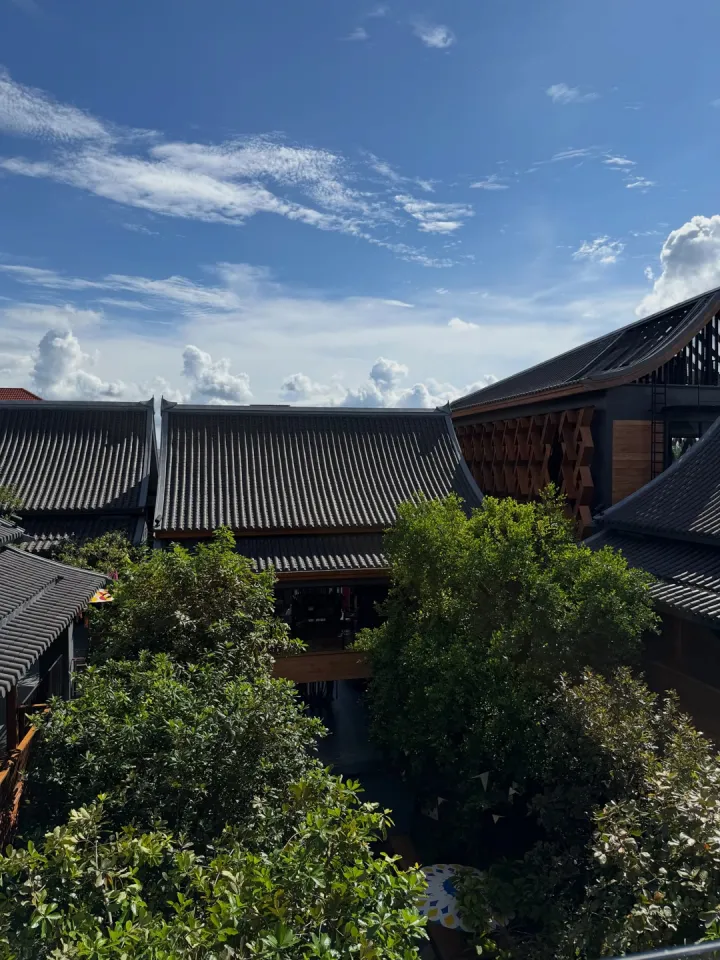
Kalm Village, an arts and cultural complex in the Old City, ended up being one of my favorite spaces from the first half of the trip. Built with reclaimed teak and brick around a quiet tree-shaded courtyard, its air-conditioned galleries host local textile and craft installations, while the wooden glass-roofed pavilion on the upper terrace looks out across the neighboring tiled roofs directly toward the ancient brick stupa of Wat Chedi Luang.
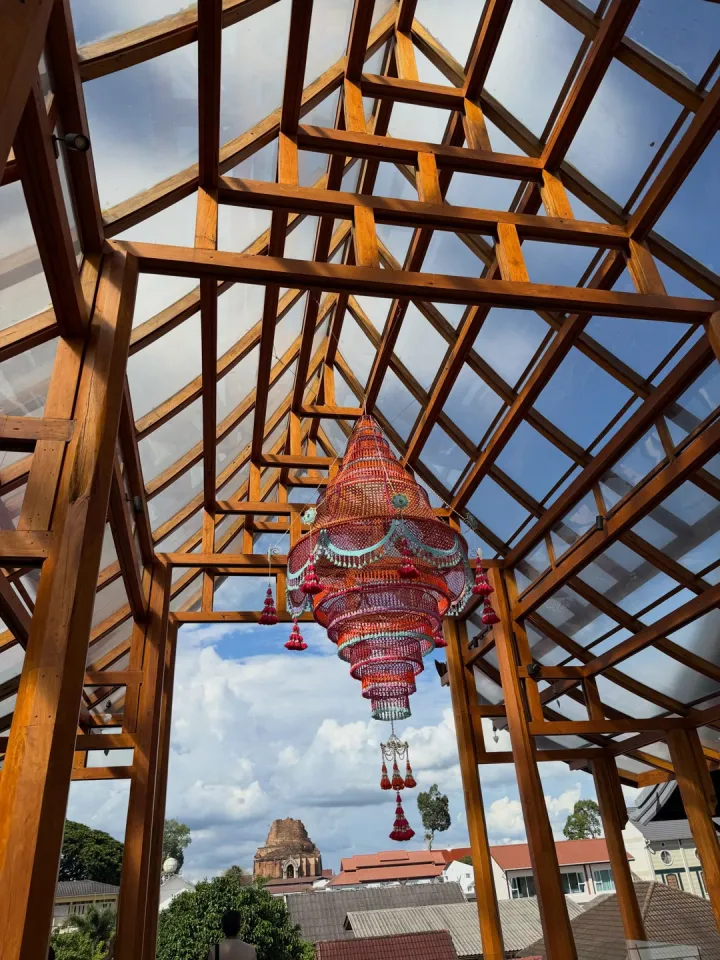
After moving to Santitham, I worked at .werb haus while trying a lighter roast, visited Ombra Caffe, and later in the trip ordered a Cold Brew at General Coffee with an unusual herbal-tea-like profile that felt quite novel.
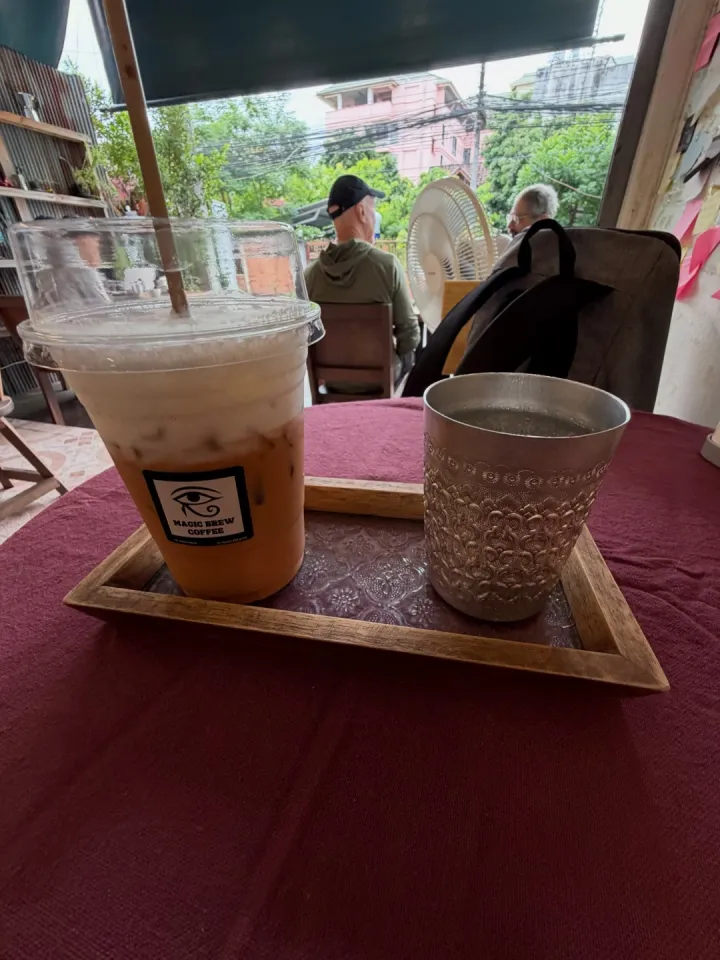
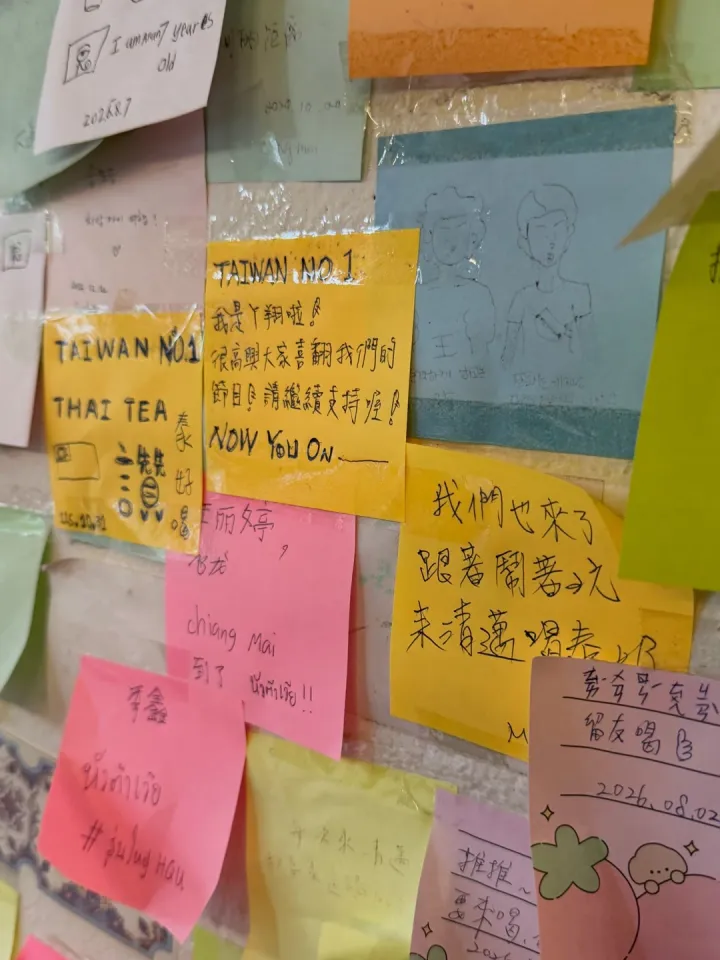
Even though I mostly stick to black coffee, I also stopped by Magic Brew, a spot well-known among Taiwanese travelers, for a cup of Thai milk tea. One wall inside is covered with sticky notes from Taiwanese visitors and the hosts of the travel show Now You On, and the best part in practice is being able to adjust the sweetness level—much friendlier if you find standard Thai tea overwhelmingly sweet.
For weight training, on my previous Chiang Mai trip I had gone to Pump Fitness when a single entry was around ฿60, and seeing it at ฿120 this time made it feel like gyms across Chiang Mai had raised their prices.
This trip I trained at two places: I went to Complete Fitness twice, where equipment was somewhat limited, but at ฿60 per visit the low price made up for everything.
I also went to The Wall Fitness once. Its floor space was similar to Complete Fitness with an added mezzanine, though it was much more crowded—likely from having fewer gyms nearby—and at ฿120 for a single entry it felt a bit pricey.
Testing TrueMove Official eSIM and Validity Rules
Instead of buying a travel SIM from a Taiwanese retailer, I went directly to the True / dtac official website to buy a native Thailand Tourist SIM 10 Days (฿349 including tax, unlimited 5G data-only) and completed real-name registration online.
I had been curious why official website pricing differs so much from third-party travel eSIMs. Even when both advertise the True network, a native carrier SIM versus cross-border roaming routes and throttling terms can be very different products underneath—though without buying a third-party card for a side-by-side A/B test on this trip, I would not jump to a hard conclusion.
I ran Speedtest twice against the TrueMove H server in Chiang Mai: right after arriving on November 5, download reached 673 Mbps, upload 72.8 Mbps, and idle ping 22 ms (with download loaded latency spiking to 526 ms). Testing again on November 14 before flying back, download was 436 Mbps, upload 71.9 Mbps, and idle ping 70 ms (with download loaded latency at 693 ms).
The overall impression was blazingly fast headline download speeds, while latency under load was another story.
Seeing a ฿15 balance in the True app and a number expiration date of November 15, I briefly wondered if I could top up small amounts to keep the Thai number alive for future trips. Checking the official terms revealed that a Tourist SIM has a maximum validity of 60 days and cannot be extended simply by topping up—keeping it requires re-verifying with a passport at a store or through support.
Eating Locally and Final Supermarket Runs
Eating solo while traveling comes down to convenience and reasonable prices, and in the second half of the trip I also started picking places that were less salty and less sweet.
Besides finding breakfast spots near Sunshine House for fried and scrambled eggs, there were a few places I particularly liked on this trip:
- Pensen: A spot that impressed me on my previous trip to Chiang Mai. Even though I wanted lighter flavors later in this trip, I saved my single Khao Soi quota of the trip for it.
- Hainanese chicken rice near the southern side of the Old City.
- A.T. Thaifoods, where I ate around November 8.
- Malee Noodle, where I went back several times.
Most daily supplies came from Maya, and I also made a trip to the Big C near the airport to pick up things to bring back to Taiwan.
My return luggage carried dried mango, UHT high-protein milk, body wash, and travel medicine. Worried that the high-protein milk cartons might burst under pressure in checked baggage, I wrapped them in layers of plastic bags and clothes before packing them inside a soft cooler bag.
After checking out on the final day, November 14, I skipped squeezing in another large shopping mall and went straight to Chiang Mai Airport to catch Starlux JX752 (A330-900neo) nonstop back to Taoyuan. Noticing on the flight map that our route crossed Chinese airspace, I ended up looking up trivia on traffic rights, flight routes, and Taoyuan Airport slot flow after getting back to Taiwan.
Staying for ten days made it clear that judging whether a city fits a short-term stay takes more than looking at room rates and street food prices.
For a solo traveler, daily transit friction, walking distances under the sun, the cost of air-conditioned spaces, and routine supply runs are what you actually feel once you settle in.